
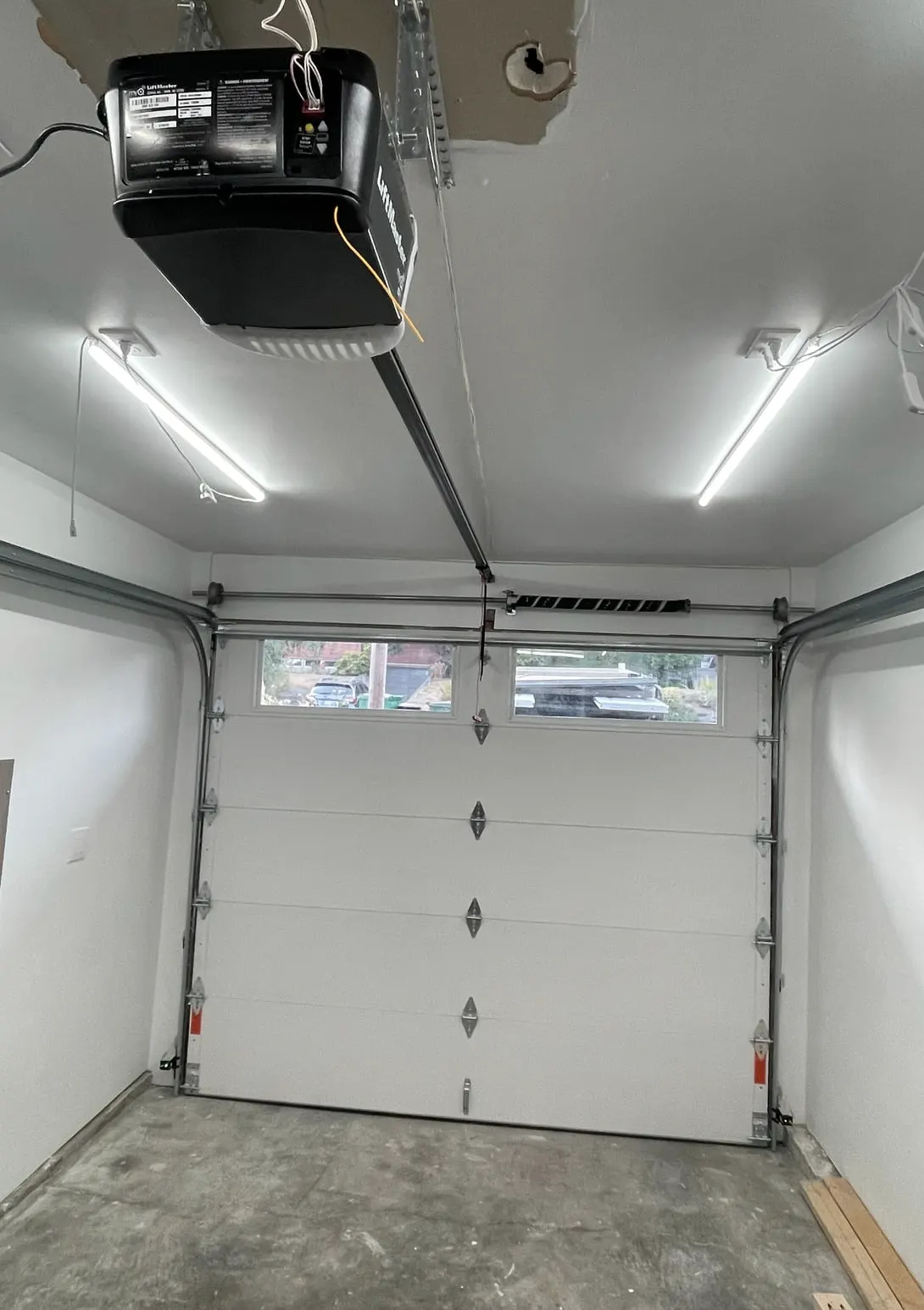
The Mistake Most People Make First
The remote stops working, so the first move is almost always the same: pop in fresh batteries and hope for the best. It's tempting because it's cheap, fast, and genuinely does fix the problem sometimes. But when a dead battery isn't the issue, swapping it over and over just delays finding the real cause — and if the problem is electrical, waiting means more wear on a system that's already struggling.
What This Actually Looks Like
"Ignoring the remote" shows up a few different ways, and each one points toward a different culprit:
- Nothing happens at all — no light, no click, no hum from the motor unit
- The unit clicks or hums but the door doesn't move
- The light on the opener turns on, but the door stays put
- The wall button works fine, but the remote does nothing (or the reverse)
- It works only when you're standing directly under the unit
- Response is intermittent — fine one day, dead the next
Each of these narrows down where to look, which is exactly how a technician approaches it: start with the simplest, cheapest explanation and work toward the more involved ones.
1. Power to the Unit
Before touching the remote or the button, check whether the opener is getting power at all. A tripped breaker, a popped GFCI outlet, or a loose plug will stop everything cold. This is especially common after a storm — and with hurricane remnants pushing through Georgia in the fall, a surge or brief outage can trip a breaker without anyone noticing. The fix here is just flipping the breaker back or reseating the plug; it costs nothing and takes two minutes.
2. Remote Battery and Sync
Next is the obvious one: battery life. Most remotes run on small coin or AAA batteries that last a year or two. If a fresh battery doesn't solve it, the remote may have lost its sync with the opener's rolling code — this happens after power outages, battery changes, or sometimes for no clear reason at all. Resyncing takes a few minutes and involves pressing a learn button on the motor unit, then a button on the remote, following the sequence for that specific brand and model.
3. The Antenna on the Motor Unit
If the wall button works but the remote doesn't, the antenna hanging from the motor unit is a strong suspect. It can get bent, knocked loose, or chewed on by garage-dwelling pests, and a damaged antenna shortens the opener's range dramatically — sometimes to the point where it only picks up a signal from a few feet away. Metal storage shelving or reflective insulation near the unit can also interfere with reception. The fix is straightforward: reposition or replace the antenna, and move metal objects away from the motor head if interference is suspected.
4. Wall Button Wiring
If the remote works but the wall button doesn't, the low-voltage wire running from the button to the motor unit is the next stop. This wire is thin and often stapled along the ceiling or wall, where it's vulnerable to corrosion from garage humidity, pinches from stored items, or damage from rodents. A technician checks the connection points at both ends and tests continuity along the wire. If it's corroded or chewed through, replacing that run of wire usually solves it.
5. Safety Sensor Alignment
This one gets mistaken for a remote problem constantly. The photo-eye sensors near the bottom of the tracks have to be aligned and unobstructed, or the opener will refuse to close the door — often blinking the light instead of making noise. Dust, pollen, cobwebs, or a sensor nudged out of place by a stored bike or lawn tool will cause this. Realigning the sensors and wiping the lenses clean resolves it in most cases; if the wiring to the sensors is damaged, that needs to be repaired too.
6. The Circuit Board
If everything above checks out, the logic board inside the opener itself may be failing. Moisture intrusion, age, and power surges — again, a real risk during storm season — can all damage the board's ability to receive signals. This is a less common cause but the most serious one, and it usually means replacing the board or the opener unit entirely.
7. Mechanical Failure
Finally, on older openers, the issue might not be electrical at all. Stripped gears or a disconnected drive mechanism inside the unit can make it seem like the opener isn't responding, when really it's trying and failing to engage the door. This typically shows up as grinding or straining sounds and requires opening up the unit to inspect the gears and drive system.
When to Call College Park Garage Door
If you've checked the breaker and the batteries and the door still won't respond, it's time to bring in a technician rather than keep guessing. College Park Garage Door handles both Garage Door Opener Repair & Installation and routine Garage Door Maintenance, which covers exactly this kind of troubleshooting — testing the antenna, wiring, sensors, and board in sequence to find the actual fault instead of replacing parts at random.
If your garage door has stopped responding and you're in College Park, East Point, Union City, Hapeville, Fairburn, Palmetto, Riverdale, or Forest Park, call College Park Garage Door for a straightforward diagnosis and a fix that lasts.